


LenSx® Laser Cataract Surgery
 Since the early 1970’s cataract surgeons have pursued better cataract outcomes by incorporating ultrasonic technology (phacoemulsification) to break up and remove cataracts. Although cataract surgery is considered to be one of the safest and most successful procedures performed in medicine today, laser cataract surgery improves the precision of many key surgical steps to provide even better outcomes and potentially make cataract surgery even safer.
Why Laser Cataract Surgery?
Invented by Charles Kelman, MD, Phacoemulsification cataract surgery has been around 1967. This technology pioneered the way to small incision surgery that has made cataract surgery one of the safest and most successful procedures in medicine today. Phacoemulsification is still considered the state of the art cataract removal technique, however, there are many steps in the cataract procedure that are still performed manually with either a surgical blade, a bent needle, or forceps. Using the LenSx femtosecond laser, Dr. Smith now performs these steps adding a greater amount of precision and improved visual outcome to the entire cataract procedure.
A New Class of Cataract Surgery with LenSx®
The LenSx® Laser signifies a bold leap forward in cataract surgery. It was the first femtosecond laser cleared for use in cataract surgery, bringing image-guided computer precision to refractive cataract surgeons. The precision of the LenSx® Laser has been tested in a series of recent clinical studies. Zoltan Z. Nagy, MD of Semmelweis University in Budapest, evaluated the system’s ability to perform anterior capsulotomies, lens fragmentation, and create self-sealing corneal incisions 1. Dr. Nagy demonstrated enhanced surgical accuracy and reproducibility:- All anterior capsulotomies created with the LenSx® Laser achieved accurate centration and intended diameter, with no radial tears or adverse events seen.
- Corneal incisions created with the LenSx® Laser were highly reproducible, with precise dimensions and geometry.
- In the same study, only 10% of manually created capsulorhexis achieved a similar diameter accuracy of +/-0.25 mm1,2. These results can be seen in the diagram, below.
- Only 10% of manual capsulorhexis achieved a diameter accuracy of +/- 0.25 mm.
Enhanced Reproducibility
The LenSx® Laser can perform anterior capsulotomy, lens fragmentation, and all corneal incisions with tremendous reproducibility. It is also used to reduce small amounts of astigmatism, making the post-operative vision even better than before. The system performs surgery according to your surgeon’s preferences. From clean three-plane corneal incisions to customized fragmentation patterns, we can create predictable cuts that carry through subsequent steps of refractive cataract surgery. 1. Nagy, ZZ. 1-year clinical experience with a new femtosecond laser for refractive cataract surgery. Paper presented at Annual Meeting of the American Academy of Ophthalmology; October 24-27, 2009; San Francisco, CA. 2. Nagy, ZZ. Intraocular femtosecond laser applications in cataract surgery. Cataract & Refractive Surgery Today. September 2009:79-82.The Procedure:
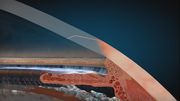
Primary Stair Step Self Sealing Incision
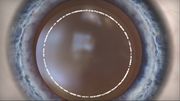
Capsulotomy


